Shape, balance, and handling
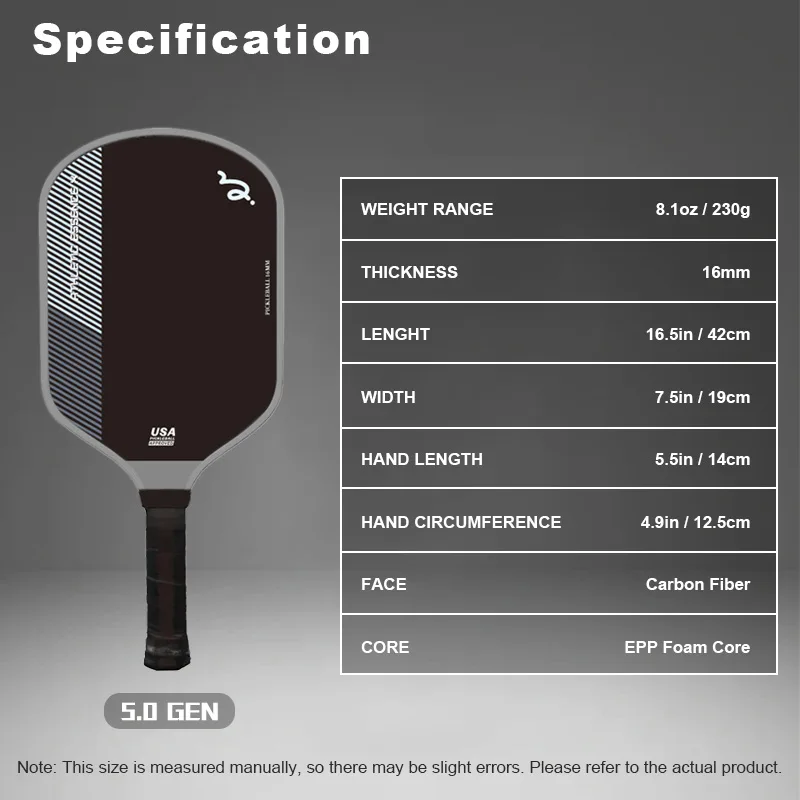
Widebody paddles favor forgiveness and a larger sweet spot. Elongated paddles add reach and leverage. Hybrid shapes sit between those two directions. Balance point, swingweight, and twistweight explain how a paddle feels in motion, how stable it is on off-center contact, and how fast it moves in the hands.
Face and spin language
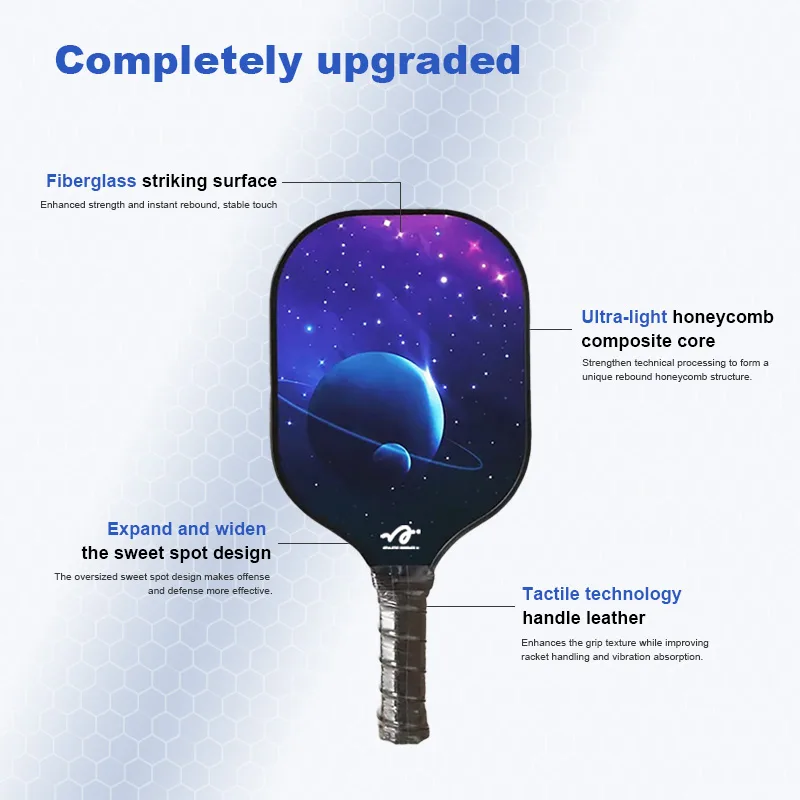
Carbon fiber, raw carbon, fiberglass, and textured faces all affect feel and spin potential. Grit and microtexture describe the surface roughness that helps the ball grip the face. Dwell time is the moment the ball stays on the paddle face before release, which influences control and spin shaping.
Core and construction terms
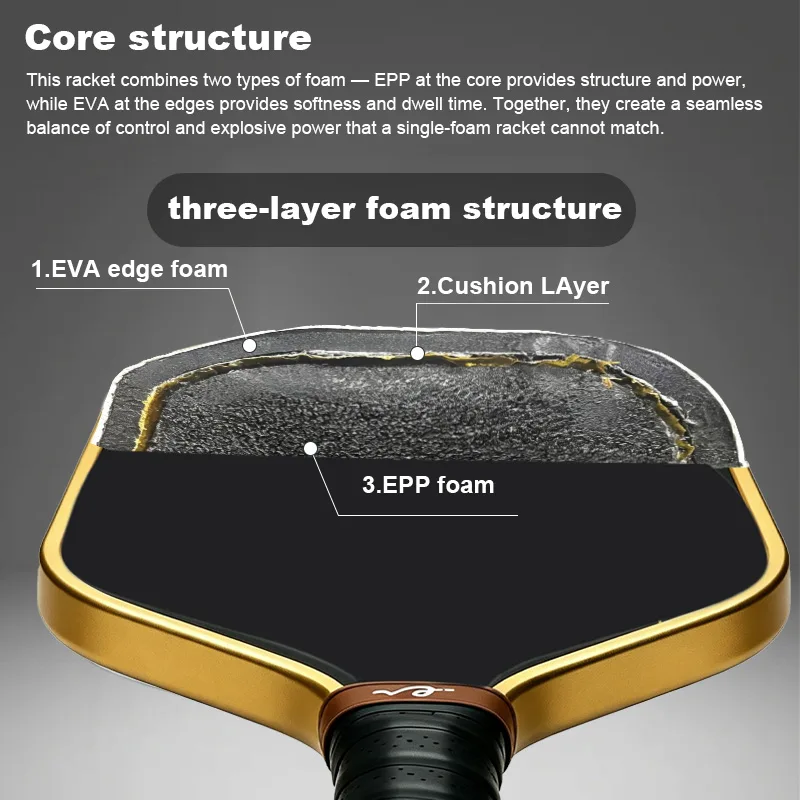
Honeycomb core is the standard interior structure, while foam core builds use foam to change feel, sound, and forgiveness. Thermoformed and unibody usually describe more integrated construction. Edge guard, edge tape, and perimeter foam are durability and stability terms that matter when comparing retail and performance builds.
Buying and sourcing terms
OEM and ODM describe different manufacturing relationships. MOQ is the minimum order quantity. Sample means the pre-production check used to confirm size, weight, finish, and artwork. Private label refers to your own brand presentation. QC means quality control, and it is the process used to keep repeat orders consistent.
Performance feel terms
Power, control, pop, plow-through, forgiveness, and stability all describe how the paddle behaves in play. Power means pace comes off the face more easily. Control means the paddle is easier to place. Forgiveness means off-center hits play more like center hits. Stability means the face resists twisting when contact is imperfect.